
Activewear and Gym Wear: Performance Meets Street
The line between gym wear and streetwear has disappeared. Athleisure — the practice of wearing athletic clothing outside of athletic contexts — is now the default uniform for everything from a weights session to a coffee run.
The Konahm Train collection, built in Perth for a global audience, sits at the exact intersection where performance fabric meets street-ready design.
This guide explains what makes gym wear work as streetwear, how moisture-wicking and compression technologies function, and how to build outfits that transition from the squat rack to the sidewalk.
- Athleisure is athletic clothing worn in non-athletic settings — gym wear that passes as streetwear.
- Polyester and polyamide provide moisture-wicking and stretch; cotton provides breathability and softness.
- A gym-to-street outfit needs one technical piece + one casual piece (e.g. leggings + oversized hoodie).
- The Konahm Train collection includes seamless leggings, zip-up jackets, and mesh layers for the transition.
What Is Athleisure and Why It Works
Athleisure is not a trend. It is a structural shift in how people dress. The category exists because technical fabrics — developed for sport — turned out to be more comfortable, more durable, and more flattering than the casual clothes they replaced.
The relationship: Athleisure is used in Polyester because polyester’s hydrophobic fibres pull sweat away from skin and dry faster than cotton. This makes polyester the dominant fibre in performance activewear, while cotton remains the standard for comfort-first loungewear.
The shift from gym-only to street-acceptable happened in three stages. First, yoga pants left the studio and entered grocery stores. Then, running shoes became everyday footwear. Finally, full technical outfits — compression tights, mesh layers, zip-up jackets — became standard casual wear.
In Perth , where the climate swings from hot dry summers to mild wet winters, athleisure is practical year-round. A lightweight tank and leggings work in January; a zip-up jacket over the same base works in July.
Moisture-Wicking Fabric: How It Actually Works
Moisture-wicking is not a marketing term. It is a mechanical property of synthetic fibres. Polyester and polyamide (nylon) are hydrophobic — they repel water.
When woven into a knit with capillary channels, these fibres draw liquid sweat from the skin surface and transport it to the exterior of the fabric, where it evaporates. Cotton, by contrast, is hydrophilic — it absorbs sweat and holds it against the skin.
This is why a cotton tee feels heavy and clings during a workout, while a polyester training tank feels dry.
The Fabric Spectrum: From Pure Cotton to Full Synthetic
Activewear fabric exists on a spectrum from 100% cotton to 100% synthetic. Each point on the spectrum trades off comfort, performance, and durability. Here is where the Konahm Train pieces sit:
| Fabric Blend | Best For | Konahm Example |
|---|---|---|
| 100% cotton | Loungewear, low-sweat recovery days | Training Lightweight Tanks (cotton base) |
| Polyester-cotton blend | General gym wear, breathability + wicking | Train Zip Up Jackets |
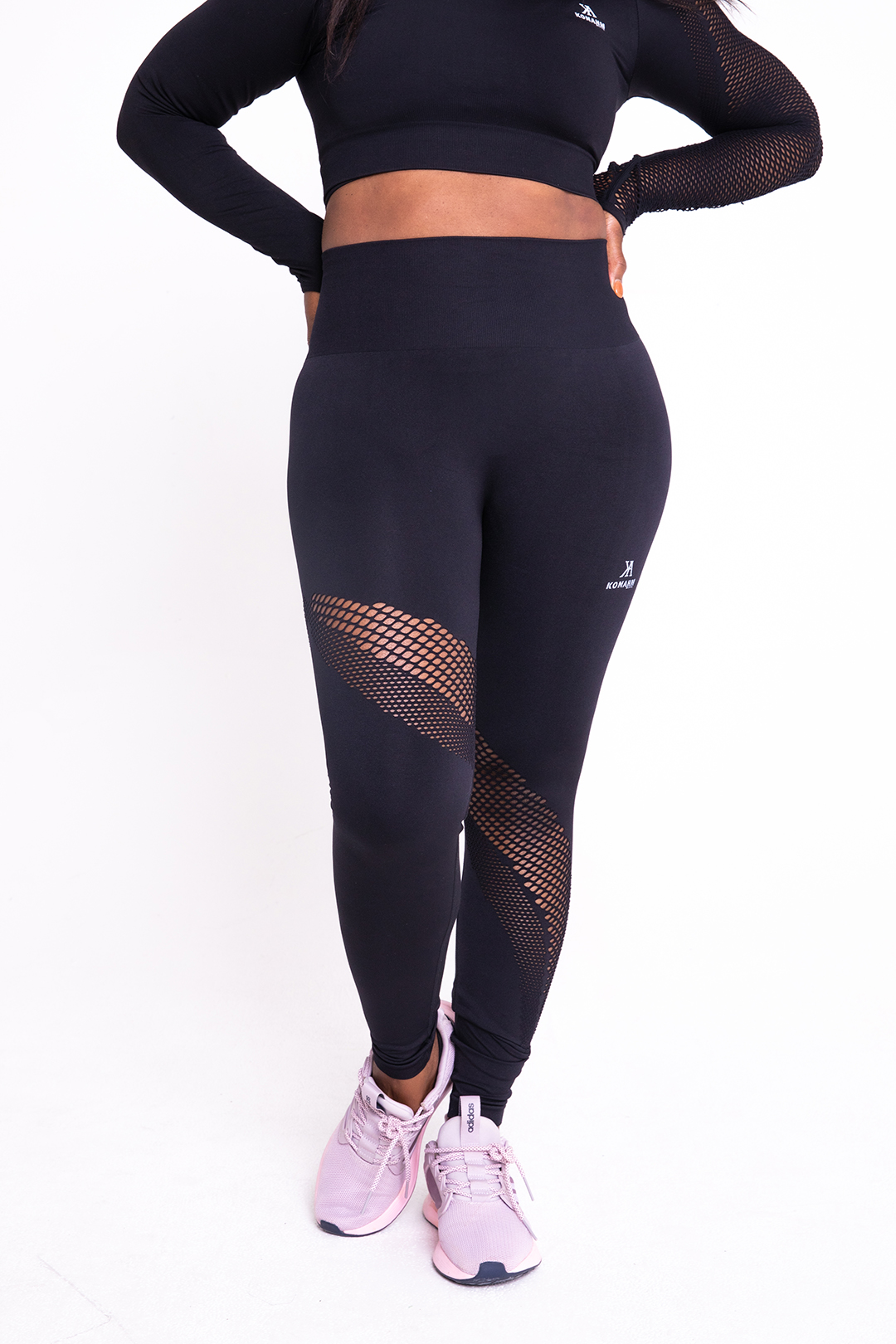
| Seamless technical knit | High-intensity training, compression | Train Seamless Leggings and Sports Bras |
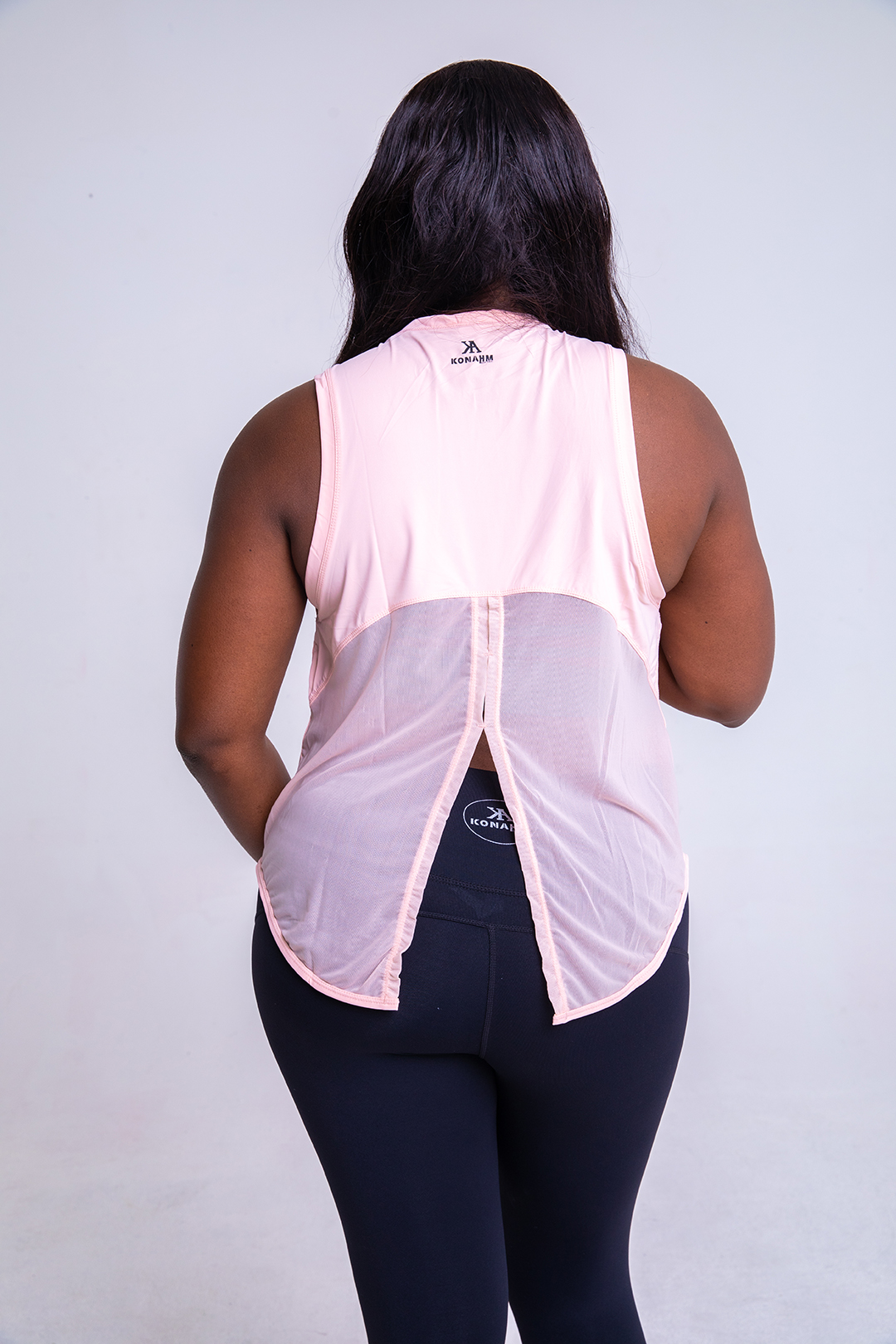
| Mesh / ventilated panels | Hot-weather training, airflow | Mesh Leggings and Crop Tops |
How to Style Gym-to-Street Outfits
The gym-to-street transition is not about wearing gym clothes to dinner. It is about constructing an outfit where the technical pieces are the foundation and the casual pieces provide the context. These four formulas work with the Konahm Train collection:
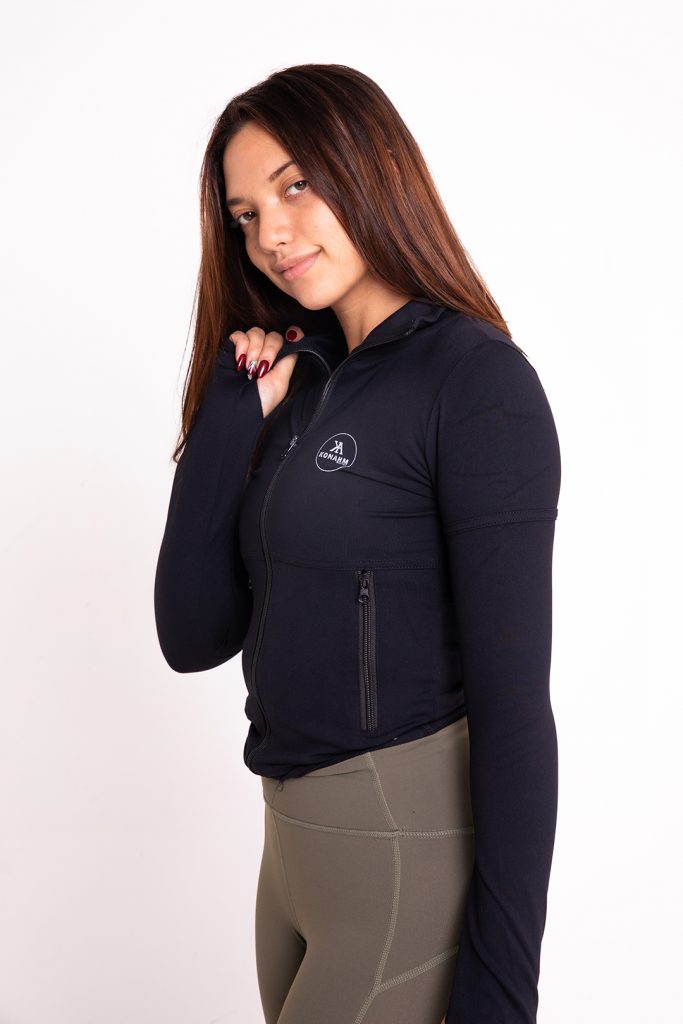
- Seamless leggings + oversized hoodie + chunky sneakers: The Train Seamless Leggings in Black with the Classic Overhead Hoodie. The hoodie provides the streetwear volume; the leggings provide the technical base.
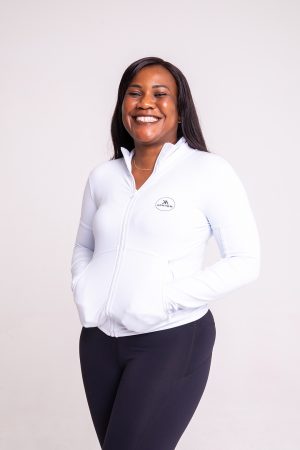
- Zip-up jacket + slim joggers + minimal trainers: The Train Zip Up Jacket in White with slim black joggers and white leather trainers. The jacket reads as outerwear; the joggers read as casual.
- Mesh leggings + long-line tee + bomber jacket: The Mesh Leggings in Black with a long-line plain tee and a nylon bomber. The mesh adds texture interest under the bomber.
- Sports bra + high-waisted shorts + open overshirt: For Perth summers. The Train Seamless Sports Bra in Black with high-waisted shorts and an unbuttoned flannel overshirt. The overshirt frames the technical top.

Shop Popular Activewear
Reader favourites from the activewear range. Live prices, one-tap add to cart.
-
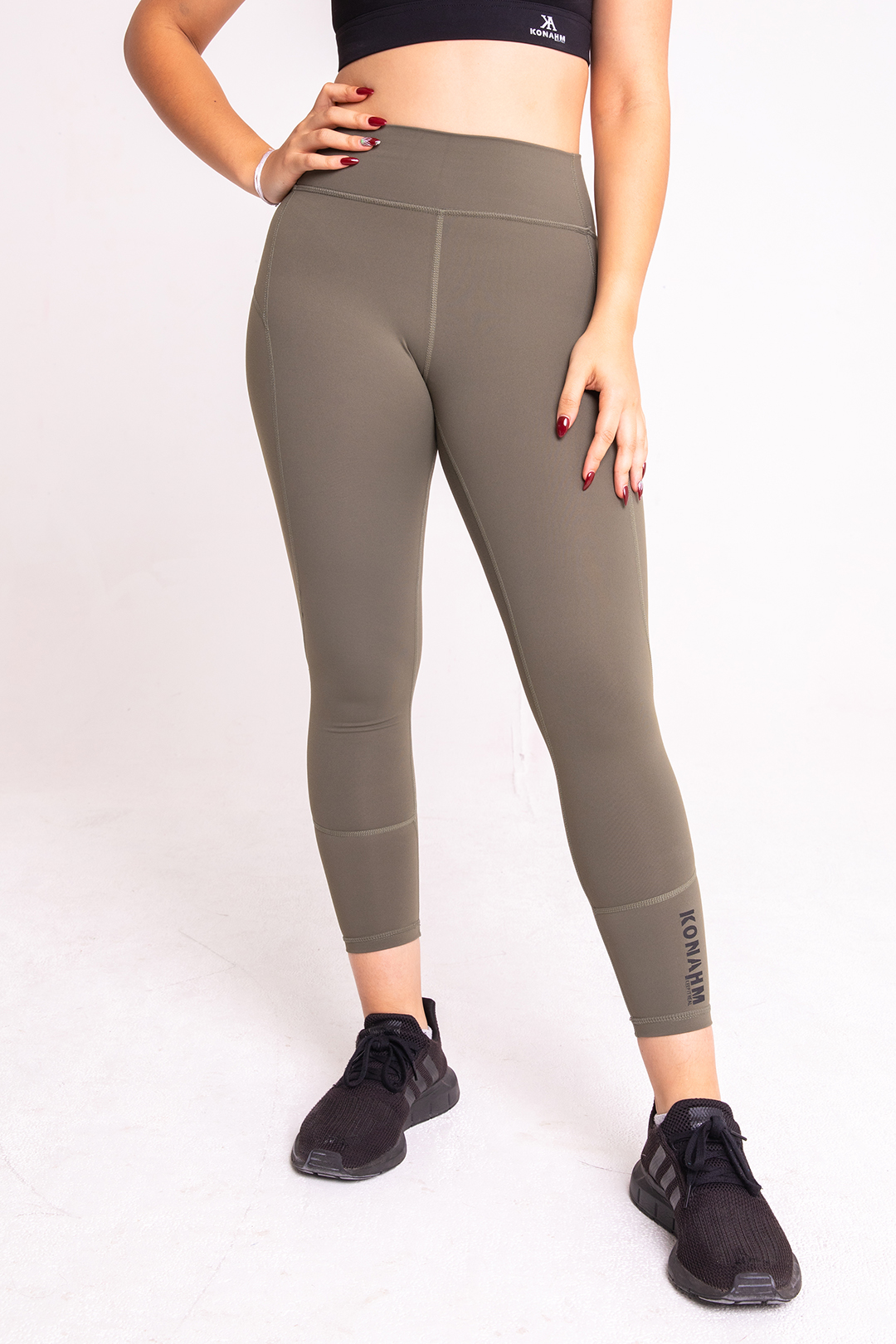
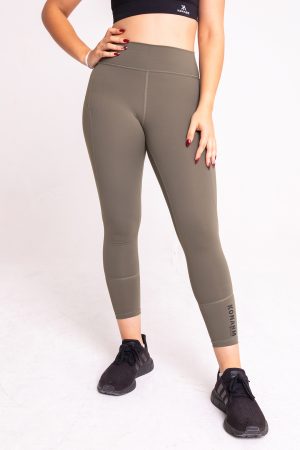
Konahm Train Seamless Legging – Sage
Original price was: A$70.00.A$34.49Current price is: A$34.49.ClearSMLXLXXLXXXL -
Konahm Train Zip Up Jacket – Black
Original price was: A$55.00.A$40.00Current price is: A$40.00.ClearSMLXLXXLXXXL -
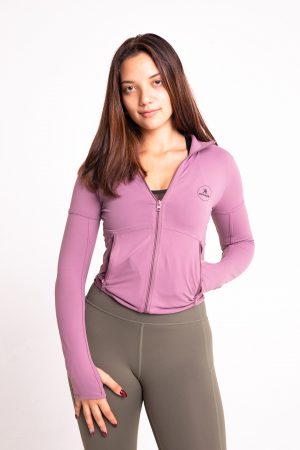
Konahm Train Zip Up Jacket – Parley Purple
Original price was: A$55.00.A$40.00Current price is: A$40.00.ClearSMLXLXXLXXXL
 Payments starting from $10.00 per week.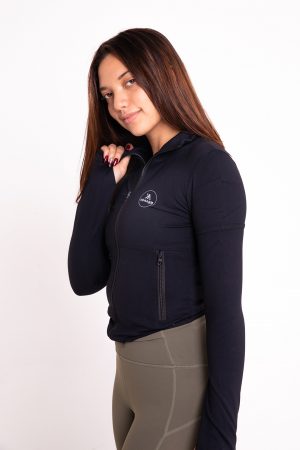
Sustainability and Fabric Safety in Activewear
Activewear sits against skin for extended periods, often while the body is heated and pores are open. This makes fabric safety more important than in outerwear.
The relationship: OEKO-TEX certifies Clothing for chemical safety — specifically, the absence of harmful substances like formaldehyde, heavy metals, and phthalates in textiles that contact skin. GOTS certifies Cotton for organic farming and ethical processing standards.
The relationship: Athleisure provides Sustainable fashion when brands choose certified fibres and ethical manufacturing. Fast-fashion activewear is often made from virgin polyester derived from petroleum, dyed with high-water processes, and constructed in conditions that do not meet ISO labour standards.
The alternative — recycled polyester, organic cotton blends, and certified manufacturing — costs more per unit but produces garments that last longer and carry lower environmental impact.
Shop the Full Activewear Collection
Tap any piece to check sizes, colours, and add to cart – straight from this page.
-
Konahm Train Zip Up Jacket – Parley Purple
Original price was: A$55.00.A$40.00Current price is: A$40.00.ClearSMLXLXXLXXXL -
Konahm Train Zip Up Jacket – White
Original price was: A$55.00.A$40.00Current price is: A$40.00.ClearSMLXLXXLXXXL -
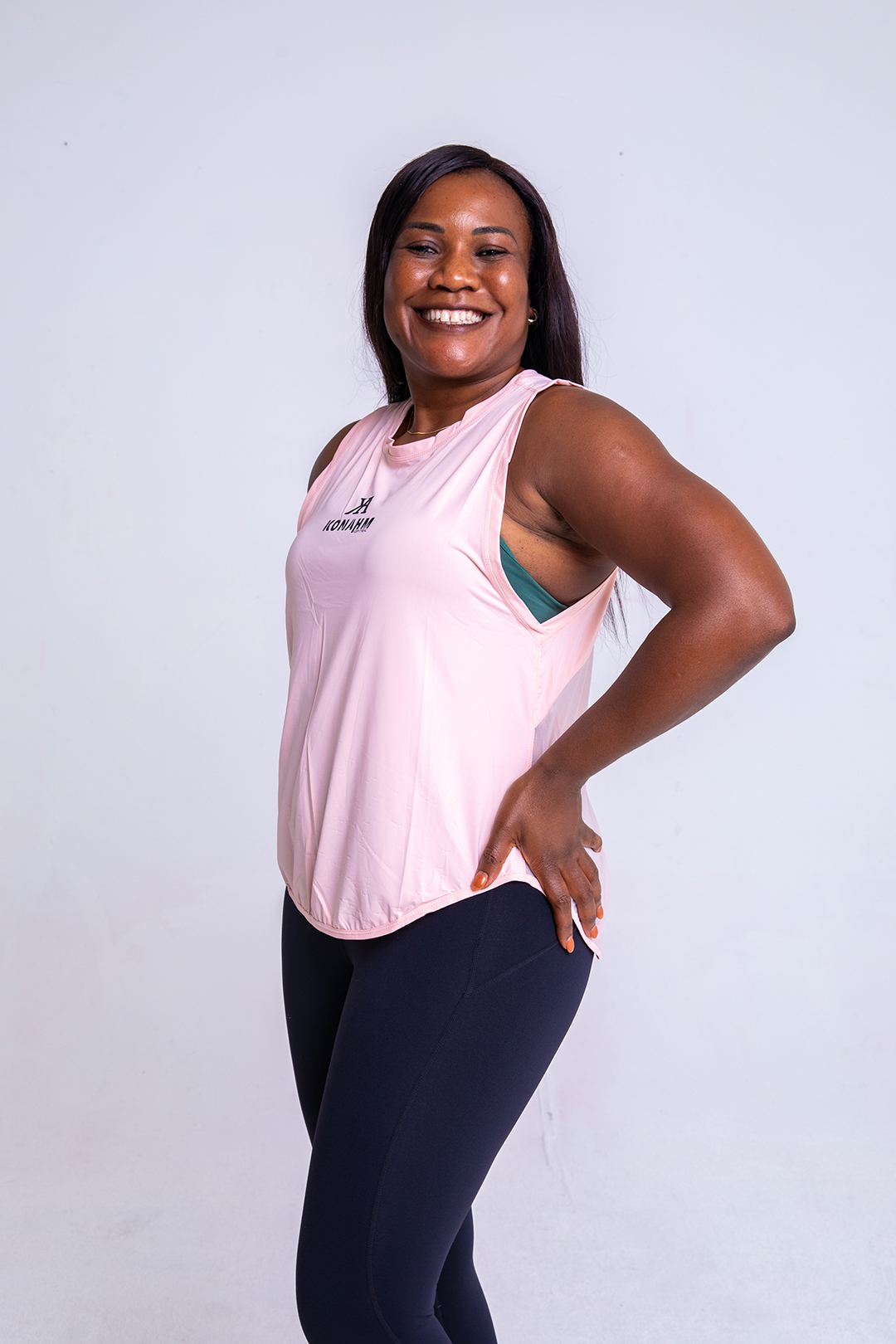
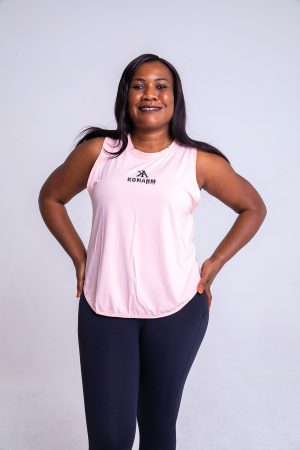
Konahm Training Lightweight Tank – Blush
Original price was: A$35.00.A$19.95Current price is: A$19.95.ClearSMLXLXXLXXXL -
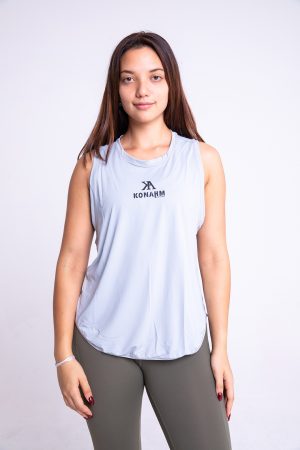
Konahm Training Lightweight Tank – Light grey
Original price was: A$35.00.A$19.95Current price is: A$19.95.ClearSMLXLXXLXXXL -
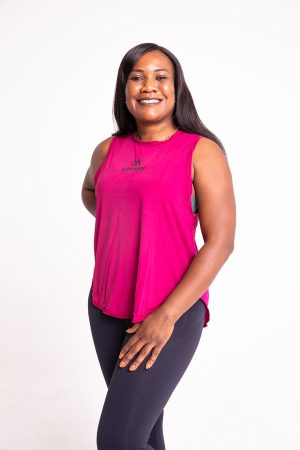
Konahm Training Lightweight Tank – Maroon
Original price was: A$35.00.A$19.95Current price is: A$19.95.ClearSMLXLXXLXXXL -
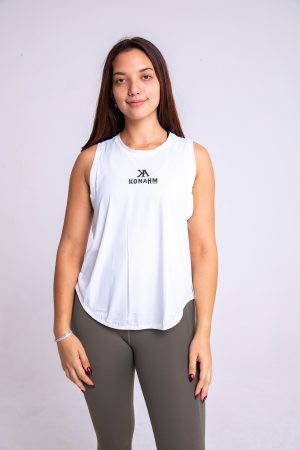
Konahm Training Lightweight Tank – White
Original price was: A$35.00.A$19.95Current price is: A$19.95.ClearSMLXLXXLXXXL
Frequently Asked Questions
What is the difference between gym wear and athleisure?
Gym wear is designed for athletic performance — compression, moisture-wicking, stretch recovery. Athleisure is gym wear styled for non-gym settings. The same garment can be both: a pair of seamless leggings works for squats and for a coffee run. The difference is how you style it, not what it is.
Is polyester safe to wear against skin?
Yes — standard polyester is inert and hypoallergenic. For extra assurance, look for OEKO-TEX Standard 100 certification, which tests for harmful chemical residues. Uncertified polyester from unknown sources may carry residual dyes or finishes that irritate sensitive skin.
How do I style activewear without looking like I just left the gym?
Add one casual or structured piece to every technical piece. Leggings + hoodie + sneakers = gym. Leggings + oversized blazer + boots = street. The rule: never wear more than 60% technical fabric in a single outfit. The other 40% should be cotton, denim, or structured outerwear.
What is seamless activewear?
Seamless garments are knitted in one continuous piece on a circular knitting machine, eliminating side seams. This reduces chafing, improves stretch uniformity, and creates a smoother silhouette. The Konahm Train Seamless Leggings and Sports Bras use this construction.
How should I wash technical activewear?
Cold water, inside-out, liquid detergent, no fabric softener (it coats technical fibres and reduces wicking), air-dry flat. Never use a dryer on high heat — it degrades elastane content and reduces compression recovery.
Compression vs Loose Fit: When to Choose What
Compression garments apply gentle pressure to muscle groups, increasing blood flow and reducing vibration during high-impact movement. The research is mixed on performance gains, but the recovery benefit is well-documented: compression worn for 2-4 hours post-workout reduces delayed-onset muscle soreness (DOMS) by approximately 15-20%.
Loose-fit activewear allows more airflow and is preferred for low-to-moderate intensity activities — yoga, walking, light resistance training. It is also more flattering for a broader range of body types. The trade-off is that loose fabric can catch on equipment or bunch during dynamic movements.
The Konahm Train collection includes both compression and relaxed fits. The Seamless Leggings provide medium compression; the Mesh Leggings are a relaxed technical knit.
Activewear Fabrics: A Technical Breakdown
Polyamide (nylon) is stronger than polyester by weight and has a softer hand-feel. It is used in high-end activewear for its durability and drape. The downside is that it absorbs slightly more moisture than polyester, making it marginally less effective for pure wicking applications.
Elastane (spandex, Lycra) provides stretch and recovery. A typical activewear blend contains 10-25% elastane. Below 10%, the garment lacks recovery — it stretches out and does not return. Above 25%, the fabric loses structural integrity and can become transparent when stretched.
Polyester-polyamide-elastane blends are the industry standard for premium activewear. Each fibre contributes a property: polyester for wicking, polyamide for strength and softness, elastane for stretch. The Train Seamless Leggings use a technical tri-blend engineered for this balance.
How to Layer Activewear for Outdoor Training
Outdoor training in variable weather requires a layering system. The base layer — the garment against skin — must wick moisture. The mid-layer provides insulation. The outer layer blocks wind and rain.
For cool mornings (10-15 degrees): a wicking sports bra or tee base, with a lightweight zip-up mid-layer. The zip allows temperature regulation without removing the layer entirely. The Train Seamless Sports Bra works as a base layer under any mid-layer.
For cold conditions (below 10 degrees): add a wind-blocking outer shell over the mid-layer. The shell should be breathable enough to let moisture escape — a fully waterproof jacket will trap sweat and leave you cold from the inside.
When to Replace Your Activewear
Activewear has a lifespan. Compression garments lose elasticity after 50-70 washes. The waistband becomes loose, the fabric no longer snaps back, and the garment rides up or slides down during movement. This is the clearest sign of retirement.
Wicking performance degrades when fabric softener residue or detergent buildup coats the synthetic fibres. If your leggings feel clammy during a workout they previously handled well, the wicking layer is compromised. A vinegar soak can restore some performance, but not indefinitely.
Seams are the next failure point. A popped seam in a high-stress area — the inner thigh, the underarm, the waistband — is not worth repairing on a technical garment. The repair creates a weak point and alters the compression or stretch pattern.
The general rule: if you train 3-4 times per week, replace your primary activewear pieces every 12-18 months. Rotate between 2-3 sets to extend this timeline. The Konahm Train collection is built for this rotation cycle — durable enough to last, priced for regular replacement. Rotation extends lifespan significantly.
Athleisure is used in Polyester because synthetic fibres provide the moisture-wicking and stretch that cotton cannot. OEKO-TEX certifies Clothing for skin-contact safety. A gym-to-street outfit balances one technical piece with one casual piece — the Konahm Train collection is built for exactly that transition.